
Montana & Wyoming - Small Acts, Wide Ripples
Season 2 Episode 1 | 54m 17sVideo has Closed Captions
In Montana and Wyoming, Pati meets people restoring language, land, and livelihood.
Pati enters the United States through Montana and Wyoming. On the Blackfeet Reservation, buffalo and a nearly lost language are coming back. Farther south, women entrepreneurs and a community wool mill are rebuilding rural economies.
Problems playing video? | Closed Captioning Feedback
Problems playing video? | Closed Captioning Feedback
Support for PATI JINICH EXPLORES PANAMERICANA is provided by Marriott International, Wells Fargo, La Costeña, Visit Tucson, New Mexico Tourism, Casa Madero, Visit Albuquerque, Arizona Community Foundation, and Tourism Santa Fe.
Support provided by:


Montana & Wyoming - Small Acts, Wide Ripples
Season 2 Episode 1 | 54m 17sVideo has Closed Captions
Pati enters the United States through Montana and Wyoming. On the Blackfeet Reservation, buffalo and a nearly lost language are coming back. Farther south, women entrepreneurs and a community wool mill are rebuilding rural economies.
Problems playing video? | Closed Captioning Feedback
Where to Watch Pati Jinich Explores Panamericana
Pati Jinich Explores Panamericana is available to stream on pbs.org and the PBS app.
Buy Now
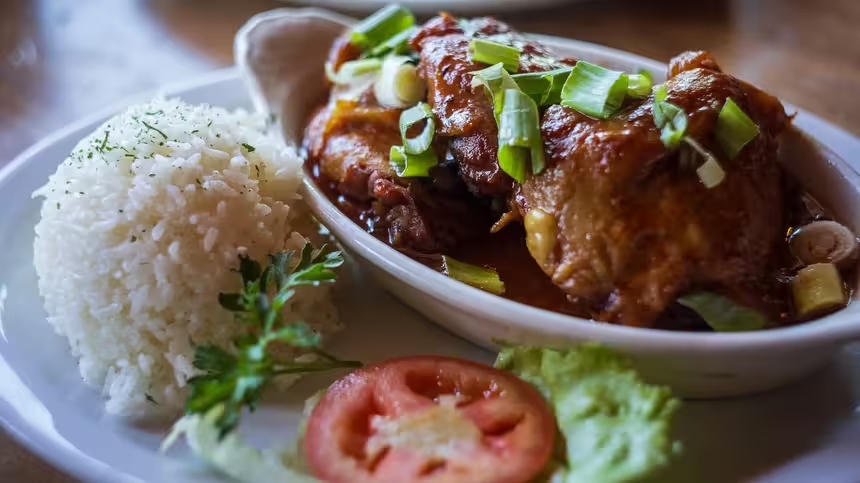
The Pati Jinich Recipe Collection
Find Pati Jinich recipes from this series and more on PBS Food.Providing Support for PBS.org
Learn Moreabout PBS online sponsorship[guitar music] EMILY: Welcome to the world of chainsaws.
PATI: Whoa.
Have you ever run a chainsaw before?
- No, never.
- Okay, what do you know about them?
- Um... - EMILY: Very little.
- Nothing.
- EMILY: Okay.
I feel I'm strong, but I don't know if I'm that strong.
[chainsaw revving] Yes!
Yes!
Yes!
I'm so happy!
[laughs] [music] [chainsaw buzzing] Amazing!
Just like that!
PATI: My life's work has been about forging bonds between my homeland of Mexico and my new home of the U.S.
Oh, yay!
Now, I'm embarking on a journey inspired by the Pan American Highway, a network of roads connecting the Americas and a symbol of collaboration across countries.
Join me as we share meals, make friends, and reimagine what it means to be American.
I'm Pati Jinich, and this is PanAmericana.
PATI: The first leg of my journey along the Pan American Highway took me from the Arctic Ocean in Alaska all the way to the Canadian border.
Now, I'm continuing south into the United States, the country where I've built a life and raised my family.
And my first stop is Montana, in the heart of a place known as the crown of the continent, Glacier National Park.
For thousands of years, these mountains formed part of the Blackfeet tribe's homeland, and they called them the backbone of the world.
In the early 20th century, the area became a national park.
I head towards the eastern edge of the park to find Kyiyo Mercantile, [guitar music] where I was told I needed to try a sweet treat.
- Hi!
- Hello.
WILL HAMMERQUIST I heard so much about your huckleberry bear claw.
We are actually making huckleberry bear claws right now, so you came to the right place.
PATI: Before winter, grizzlies eat huckleberries by the tens of thousands.
So do people.
WILL: That's what a gallon of frozen huckleberries would look like.
Okay, and so this is a treasure.
- Purple gold.
- Thank you.
Huckleberries are a wild berry that grow in the mountains of Montana.
We actually mix them with organic wild blueberries, and then when we let them thaw, it creates a juice to create our distinctive pink-purple-hued glaze.
It's hard work to go out and get them.
You're in the mountains, there's wild animals, there's bears.
- So it's an adventurous endeavor to get huckleberries.
- Yeah, yeah, yeah.
I think that's probably the best way to put it.
- You're hired.
- I am?
[music] Mmm.
Mmm.
The bear claws were so good, I'm bringing some to share.
I follow the highway east out of the mountains and onto the plains where I meet Ervin Carlson and Chazz Racine ERVIN CARLSON CHAZZ RACINE who together lead the Blackfeet Buffalo Program.
It's the tribe's own effort to bring buffalo back to their land.
We're here on what we call now as Buffalo Spirit Hills Ranch.
This is the headquarters for our Buffalo program.
- Are you originally from here?
- ERVIN: Oh yeah.
- PATI: From Browning?
- ERVIN: We're from here.
Let's go over and meet the iinnii.
Oh, I see them.
Wait, I see babies.
CHAZZ: These ones are actually the two-year-olds.
Probably weigh about, what, seven, eight hundred pounds right now.
PATI: For thousands of years, buffalo shaped life on these plains.
Then, almost overnight, they disappeared.
Tell me about the buffalo disappearing.
Well, that's a big story.
In the late 1800s and early 1900s, the U.S.
government started moving west, and they just started wantonly killing buffalo.
You know, they thought if they get rid of all of the buffalo, then they can get rid of the Indian population too.
They wanted the land, they wanted it open for their settlement, wanted it open for their cattle, and they just killed the buffalo to near extinction.
And what was the impact to the community?
To ours, to the Indian people, that was a near destruction to us because that was our life.
Our food, our clothing, our lodges, our tools.
I mean, they were everything to us.
We had like a year here that called a starvation winter because they didn't have their food source.
We lost Buffalo, we lost our land, culture.
[ambient music] Everything surrounds these.
That's what it's based on.
It's like this.
The buffalo is central.
CHAZZ: Yeah.
ERVIN: Bringing back buffalo now and getting our people back to eating this, what we're trying to do, is to all eating all healthy foods.
And buffalo is the healthiest meat that you can eat, you know, grass-fed.
I am the president of an organization called Intertribal Buffalo Council.
That's 90 tribes across 23 states, from Alaska all the way back to the East Coast, returning buffalo to our lands for our cultural and our spiritual connection to the animal and having them here for future generations.
PATI: On June 26, 2023, the Blackfeet Nation released 49 buffalo onto tribal lands where they roam freely for the first time in 150 years.
You guys, I had brought you something and I left it in the car.
Oh, gee, thank you very much.
Appreciate it.
PATI: The bear claw with huckleberries.
[Ervin and Chazz moaning] Looking at you guys eating them makes me want - to bite another one.
- Oh, yeah.
But I will not, I will not.
Chazz is the one who looks after them day to day.
He wants to show me where they range.
Oh, there they are.
Oh, my gosh.
Oh, there's so many.
There's probably about 500 and some buffalo here.
Wow.
From the small herd released in 2023, today the tribe manages around 750 buffalo.
The buffalo have returned to this land and to its people.
Chazz tells me to run.
[Chazz shouting] [ambient music] A mission of Ervin and Chazz is to have the community be able to eat buffalo again.
I drive north, up to Duck Lake near Babb to meet Mariah Gladstone.
MARIAH GLADSTONE Founder, Indigikitchen up to Duck Lake near Babb to meet Mariah Gladstone.
Mariah is at the forefront of restoring foodways and ancestral knowledge in her community.
Can you tell me a little bit about where we are?
So right here, we are on Duck Lake.
What we don't have in money in this community, we make up for in deer and elk and so many berries.
And There's food all around us.
You might not see grocery stores, but we're surrounded with food.
We're in Babb, and we call ourselves Babylonians.
We have a community that can sometimes be even cut off from the rest of the reservation in the wintertime because of the snow and the wind.
And so we have to be really interdependent and lean on each other for help in times like that when we get snowed in.
So this is Tina's place.
[horse whinnies] - PATI: Hey, Tina.
- Hi.
CHRISTINA FLAMMOND Founder, C&C Meat Processing - Nice to meet you.
- Nice to meet you.
PATI: So, warning with the buffalo?
- CHRISTINA: Yep.
- PATI: Oh, how long have you had it?
He's seven years old.
We had him since he was a day old.
He lived in the house there for about four months of his life.
We raised him, he slept in the house.
- Really?
- He become part of the family.
So his name's Iinnii Naato'si.
You gonna give smooches?
- Hey, over here.
- Will you give me a kiss?
[bison grunts] Oh my gosh!
Yum!
It is like so scratchy.
So he's figuring out exactly who you are and what you're about.
Naato'si, I'm going to touch you, okay, brother?
Does he like it?
Yeah, he loves to be scratched.
[bison grunting] MARIAH: Like old Blackfeet will stuff pillows and dolls and things with that buffalo.
To take this home with you, now you've got his power.
You're taking him with you.
Oh, I just touched him.
You gave me goosebumps.
CHRISTINA: Well, you said, give him a kiss, like this.
- Oh, yes.
- Kiss.
Oh, I'm growing on you.
[Christina laughing] CHRISTINA: Being native, our women followed our men on our hunts.
We was there to help with everything.
So it was the women that harvested the buffalo?
Mm-hmm.
The men was there to help.
They're the ones that killed them.
They're the ones with the grand schemes.
And when they jumped them off the cliffs, we was at the bottom of the cliffs waiting for them.
When it comes to the industry of processing meat, it's a dying art.
There ain't a lot of people that do it anymore.
And for a woman to do it, it's a man's world, you know?
This is my workshop.
[shutter opens] - Wow.
- Wow.
This is a steer that we just got in today.
So how long does it take you to get it to this place?
- 15 minutes.
- She said 15 minutes.
- She's fast.
- I'm in shock.
Oh wow!
This is the most impeccable carnicería I've ever seen.
So here you bring kids and schools to teach them?
Mm-hmm.
- Oh, that's the tenderloin.
- That's awesome.
Probably the best cut of meat you'll get as far as buffalo or any animal is the tenderloin.
It's Mariah's, but she's going to share it with us.
- I'm going to cook it up.
- Yes.
On Duck Lake, Mariah gathered more ingredients for our meal, fireweed shoots, wild onions, and bee balm.
We're so fortunate to be able to have this cut of meat.
Tenderloin is so special because, like the name implies, it's very tender.
And it has lower fat content and higher protein content than beef does per ounce.
We build flavor from the herbs we just got.
Her chosen fat to sear the meat, buffalo tallow.
MARIAH: It's what Blackfeet people traditionally used as a cooking oil.
PATI: Whoa.
Oh.
[meat sizzling] You can just hear it, that sear is so good.
PATI: And for a side dish, nixtamalized corn, a technique I'm familiar with from Mexico.
My mom's side is Cherokee, and corn was very, very important to Cherokee people.
PATI: But cooked in a way I hadn't seen before, seared in tallow and flavored with bee balm.
[music] MARIAH: Amazing.
That's beautiful.
You're slicing it like butter.
- Let's build plates.
- Okay, let's build plates.
[gasps] Oh, it's so pretty.
Mmm.
Mmm.
Soft and juicy.
- This is incredible.
- MARIAH: Mm-hmm.
It's truly special.
I'm now headed towards Browning, a town of about a thousand people.
And the headquarters of the Blackfeet Nation.
I'm meeting Danielle Antelope, DANIELLE ANTELOPE Executive Director, FAST Blackfeet who's working to restore food security to her Blackfeet community.
She wants me to taste the traditional food she loves in the parking lot of a grocery store.
[speaking Blackfeet] DANIELLE: My Indian name came from my great-grandmother.
I don't sing, but I talk a lot.
Beautiful name.
It fits you just right.
And you do come singing in whichever way it is.
JAMES WATTS Founder, Grandma's Dry Meats - I am James.
- PATI: James.
Watts.
My Indian name is Sakumutapsi.
- Which means?
- Hard worker.
It's been handed down since the beginning of time.
They passed down how to make this dry meat, how to preserve the meat so that we could carry it through the winter.
So that when we're traveling, we're traveling all the time, keeping up with the herds of buffalo.
DANIELLE: You call this grandma's dry meat because your grandma taught you how to cut it.
My grandma gave me my first dry meat, my piece of dry meat, dug in her purse.
That's how it is.
And I ate it.
And it was the best that I ever, ever had.
And how did you learn how to make it?
I started hunting.
I didn't know how to hunt deer, antelope, or elk or moose.
And my aunt lived right out of town, and she taught me how to start cutting it, and hanging it, and smoking it.
And then everybody heard I was a hunter and had meat.
I would even give meat away to elders and people that didn't have meat.
Just a Blackfeet way of hunting.
JAMES: Yeah, I shared it.
That's a good spicy one.
Oh, I see the chili flakes.
[dog whimpers] This is fantastic.
Can you imagine instead of going and getting pop and cookies and chips and grab dry meat instead and the difference in that nutrient content but also the relevance to our culture.
JAMES: ♪ Hey yo, hey yo, hey yo, hey yo ♪ PATI: I asked Danielle to take me to her organization's office which is also home of the food pantry.
So we're going to enter the food pantry and that says Oyop Food Pantry.
Oyop in Blackfeet means eating together.
So this food pantry is need-based rather than income-based because we don't believe that people should have to prove that they're poor enough to need help.
It's a Blackfeet way of thinking that if we help those that are struggling the most, then we're all better as a tribe.
PATI: So how did you get into this, Danielle?
Because I know this is very personal for you.
This picture is my great-grandma when she came back from boarding school, and this is her grandmother who raised her.
So this picture is our visual in our family of when our identity changed, when our health changed, when food changed.
So in our family, this was her first day when she returned from boarding school.
And she was taken to boarding school at what age?
- At 14.
- At 14.
She came back at 18.
PATI: Then where was the boarding school?
DANIELLE: Here on the reservation.
And we visit every Memorial Day, so tomorrow I'll be visiting that cemetery because her brother didn't survive boarding school.
PATI: When you say her brother didn't survive boarding school?
All boarding schools have cemeteries next to them because children had broken hearts.
And so when they got forcefully removed from their families, they couldn't communicate because they're not allowed to speak their language and they'd be punished.
And it always, as a kid, was so shocking to me.
Grandma would be like, this is the school I went to, this is the school that took our identity, this is the land, and went up and down and looked at the plants and stuff.
And like, there's this school, there's this recess field, and there's a cemetery.
It's like the school is a place where kids are supposed - to be taken care of.
- Yeah.
People don't realize that with boarding schools, food was used as a weapon in that too.
So if you refuse to send your kid to boarding school, then they wouldn't give you your tickets for ration.
And so it was rather let your kids starve or send them to boarding school.
So more and more kids went to boarding school until all the kids were at boarding school.
A smudge is the way that we cleanse our spirit.
All that energy and all the sadness that you just took from my stories is weight on you right now, and it altered the way that your energy is.
And so what it is, is you're praying that you have a strong mind, a strong body, all the way to your toes, and a strong heart.
My mom is the frozen pizza generation.
She said, like, at that time, I didn't feel that responsibility to be bringing back any traditional foods.
I grew up eating a whole lot of chicken patties and chicken nuggets and cheap food that got me full.
So when I graduated high school, I was very obese and very depressed.
So, Danielle, where did you find the power to make the change?
That's a good question.
- My kids.
- Hmm.
DANIELLE: Definitely my kids.
Because when I became a mom, I realized how much power that was to fill your own cupboards and to fill your own fridge.
And that's power, but that's also a real struggle for people.
I've seen what happens to a generation when you just stay mad.
If you redirect your energy, they can really make change.
But I only knew that it could happen within these programs and within individual households because it worked in mine.
It's not just for my community.
And that's really the message that I like to share is like the work that we're doing is a model actually for across the country.
So this is our forever home.
That's why we're calling it, because we never want to rent again and we never want to move again.
PATI: So you're going to help entrepreneurs come to market?
Wanting people like James to not feel that there is no way that he can make a career out of this.
But there actually is with this commercial kitchen space.
And where are you in the process?
Yeah, we just raised $5 million in two years.
Wow!
One of the crazy things about that is that our community don't know yet.
How do you think they will react once they know?
I think the community would be really excited.
And I think they show up and show out for us all the time.
PATI: And there we stood on open land, nothing built yet, while she pointed to where each room would go.
Someday, I want to walk through the doors of the forever home.
On the other side of Browning, I'm visiting a school here where math, science, history, all of it, is taught in Blackfoot, a language almost no child here grew up speaking.
DARREN KIPP Director, Cuts Wood School So we'll start out today with Run and Scream.
- Okay.
- It's a traditional game we play.
Kids start out and you run as far as you can screaming, and when you run out of air, you stop and you mark it.
It builds the lungs, it builds everything up.
Every day they go a little further.
You can even join in if you want.
MR.
CHARLES “LEFT HAND” All right, with one breath, this is your final time doing this, so let's see how much progress you made.
Ready?
All together.
[speaking Blackfeet] [children shouting] Nice!
Alright, good job!
Too fast!
You're fast!
LEFT HAND: It's a good way to get a vibe off the kids, how they're feeling that day.
[drumming and chanting] DARREN: When the founders, my father and that group got together, Big Circle has been from day one a part of the system here.
[speaking Blackfeet] something that we share with other tribal communities that come from all over the world to visit our school.
[singing in Blackfeet] We want this school to be like grandmother's house, a place that's warm, full of love, good food, and nurturing.
LEFT HAND: First of all, since it's end of the year, we would like to acknowledge one of our teachers, Ms.
Byksy.
She's been my teacher probably 20 years ago.
That's how long I've been learning from Ms.
Byksy.
MRS.
BYKSY ¦ MRS.
BURD DARREN: Ms.
Burd's a first language speaker, MRS.
BYKSY ¦ MRS.
BURD and she can teach.
That's very powerful.
There are not very many first language speakers left in North America.
[speaking Blackfeet] MRS.
BYKSY: Elks and the Water Bear Chief gave me this name.
[speaking Blackfeet] there is that philosophy that goes all the way back to the founders, that we just won't change.
[speaking Blackfeet] PATI: The circle was very moving in how kids introduce themselves, acknowledging their parents.
It grounds you when you say who you are and who you come from.
DARREN: Our language brings a sense of identity to our children.
It's very empowering.
LEFT HAND: The girls like to give you a gift for your travels.
This is very, very humbling.
Thank you so much.
I feel very welcome.
Oh, it's so pretty.
LEFT HAND: That is a beaver, ksisskstaki.
Awwww.
DARREN: So in 1987, the community put together a survey, just seeing who was speaking the language, where was the language being heard, What they found out in that survey was there were no children speaking Blackfoot.
PATI: Wow.
DARREN: Most first language speakers were in their 60s and older.
And so they could do the math.
By 2010, it's gone.
PATI: There goes the music, the songs, the dances, the prayers, the ceremonies.
Forever.
DARREN: So by 1992, they formed Piegan Institute.
And my father, he would say, there's no handbook on how to save your language.
And so when they opened that first school up at Moccasin Flat, they literally were grabbing elders, putting the kids in there, and they were just figuring it out.
But what they were doing was giving everybody in the community a sense of hope.
And that revitalization took off from there.
MRS.
BYKSY: Are you okay?
[speaking Blackfeet] DARREN: Once our language started coming back, everything else came with it.
All of a sudden we get Buffalo back.
[speaking Blackfeet] Next thing we're doing food sovereignty.
We started teaching the language really seriously in our public school.
And then you tie that in with the sign language.
We wished as kids we had Kenny, Winslow and Bill WINSLOW, BILL, KENNY Sign Language Teachers in our classroom teaching us sign language.
MRS.
BYKSY: There's kids that have come out of this school who are leaders in this community, who are leaders in their schools.
They come here very shy.
By the time they leave here, they've excelled way above a lot of the students.
What do you think your dad would say if he saw you here today and know what you're doing?
Ah.
[laughs awkwardly] [Pati and Darren laughing] My father wasn't ready to leave when he did.
And I really feel in my heart of hearts, he'd be glad that the school is still going.
And I wish he would have been able to live long enough to see the return of our alumni coming back to teach.
[speaking Blackfeet] Iitsskonnikis is cheese?
[Pati laughing] [ambient music] My journey takes me across Montana, over the continental divide, the spine that runs the length of the Americas.
Water on one side goes to the Atlantic, on the other, the Pacific.
West of it is Missoula, Montana's second largest city, where I heard about a locally born organization that partners with dogs to target ecological conservation, from finding and protecting endangered animals and plants to contributing to global anti-poaching efforts.
- Hey Pete!
- Hi Pati, welcome.
Do you have a long waiting list of dogs that could come here and be a part of the organization.
DR.
PETE COPPOLILLO We screen about a thousand dogs for every one that we take.
It's a very exceptional set of personality traits to make it.
We ask them to do crazy things.
You know, we take them in helicopters, we put them on boats.
Years ago, we had to take them on elephant back.
And especially these, you know, ones who come from often difficult circumstances.
DUDE Working Dog Dude, he had people at multiple shelters where he was on schedule to be euthanized, and they would move him around to keep him - from being euthanized.
- PATI: I love second chances.
I am a second chance person.
I switched careers.
So if you're not good at something, it doesn't mean that you can't be at something else.
So dogs that were too much are amazing for saving the world.
Exactly.
Dude, you look like a movie actor.
So cute.
He has so much personality.
So, Renae, you've been here for how long?
It'll be seven years this fall.
So I have a history of working with different dogs in different disciplines, I suppose.
I mostly was running sled dogs in Alaska.
And I loved Alaska, but I'm from Montana originally and wanted to come home and cold called working dogs and got a spot in here and haven't looked back since.
I know you're ready to work.
Let's do it.
Let's do it.
I want to see what he does.
Okay.
What he's gonna do is he's gonna sniff these three boxes in front of us, and I have a remote control that is gonna pop a toy out of the box that has the odor in it.
And he'll do what's called his train final response.
Well, he'll sit, and that's his way of telling me that he's found it.
You ready to go?
Okay.
Go find.
[music] PETE: So he's checking each one.
- Okay, and that's his alert.
- PATI: Oh!
[all cheering] Working Dogs is sprawled over 44 acres of land where scents can be hidden and infinite real-life scenarios can be practiced.
RENAE: So in this jar we have a piece of cougar scat.
So we'll place this out and let Yagi find it.
This is a pretty difficult task for these dogs because now they have everything out here to contend with YAGI Working Dog and they've got to show us that they really want to stay focused and are determined to find the target.
And how long did you have to train him to get him to this point?
It took Yagi two years to be deployable.
Which is much more than the other dogs.
A little longer than other dogs, yeah.
He had some challenges as far as just his trust of people, and we kind of had to make sure that we had this connection.
Yagi and I actually went to Indonesia last year together.
I'm here in Way Kambas National Park in Indonesia with Yagi and Quinn, and we are on the search for the critically endangered Sumatran rhino.
We were there living in a national park for two months, and there was elephants, there was tigers.
The mission was a success.
Both dogs were able to find Sumatran rhino out in the wild, and it's something that humans have struggled in finding for the past 30 years.
So you've grown very close to Yagi?
Yeah.
He's not the dog that I ever would have chosen for myself to work, but now I can't imagine a life without him.
He lives with me full time.
He sleeps at the foot of my bed every night.
He's my best friend.
So we'll take this cougar scat in the jar, and we can just go set it anywhere out in the Aspen Grove.
- How's that?
- RENAE: That's perfect.
- Now we go get Yagi?
- Yep.
Go find.
And now he's off.
PATI: So now he's on a mission.
There he goes.
Yes!
Good boy!
[music] PATI: Now we're going on a trek to find an invasive weed species known as Dyer's woad that can wreak havoc on local farms and Missoula's food supply.
ACE Working Dog Ace, however, has been trained to find it.
Ace, however, has been trained to find it.
NGAIO: Yes!
You found it?
NGAIO: She found one, and I hadn't noticed, trying to flower.
So if it flowers, then that's very dangerous because it can have how many seeds?
DR.
NGAIO RICHARDS One plant can have about 20,000.
One plant can have about 20,000.
If Dyers' woad gets into agricultural fields, it compromises crop for that season and for other seasons.
If it gets into rangelands, it compromises the grazing.
And when it gets up here into a protected area, it's really for the pollinators so that they have enough of the plants that they need to pollinate so that we can have food and good food.
PATI: Ace gets a well-deserved treat, and so do we.
NGAIO: This is my favorite burrito place in Missoula.
It's called The Breakfast Club.
What did you get, Brittany?
I got the veggie burrito.
PATI: I saw that they have beef souvlaki.
- RENAE: Cheers.
- Cheers.
NGAIO: Santé.
Mmm.
The tortillas are ridiculously soft.
The filling is so tasty.
I'm incredibly surprised by eating such a good burrito that has beef souvlaki and feta cheese.
And hash browns.
And I'm like, whoa, this is totally new to me.
[music] Missoula's food scene has grown with the people who've moved here.
A lot of it runs through one kitchen, at a place called Soft Landing.
So tell me a little bit about what's happening.
So tonight we're going to have an event called Taste Around the World, and it will feature different chefs from four different countries, and customers can make a meal out of all the different dishes.
MARY: It's kind of like a pop-up food hall vibe.
PATI: The kitchen was full of aromas and flavors from different corners of the world.
Here, I met Grace from Congo, Tekea from Eritrea, and Munaa from Syria.
What are we cooking today?
- Sambusa.
- PATI: Sambusa!
What's the name of this?
- Injera.
Injera.
- Fattoush and tabbouleh.
- Tabbouleh.
- MUNAA: Tabbouleh.
- Okay, I'll give it a try.
- Yeah, let's go.
[marimba music] Oh!
[laughs] Mmm.
I love this.
Yay!
Yay!
Ta-da!
[laughter] Tell me a little bit about soft landing and how did it start?
We started in 2015.
A friend of mine sent a text message to me with a photo of Alan Kurdi, who was a three-year-old who lost his life crossing the Mediterranean with his family.
That photo made such an impact on me and my group of friends that we started to kind of ask questions.
Is there a way that we here in Missoula, this beautiful city, can help refugee families?
A lot of people joined the effort.
It can be really challenging arriving in a new place, speaking a new language, and we just wanted to make sure that any families that came were going to get a soft landing.
When you lived in Congo, did you cook?
Yes.
If you have a party, you can call me.
200 people.
Wow, so you cooked the entire meal for the weddings?
Yes.
PATI: Who came to the U.S.?
Just you or more members of your family?
I and my family.
I have three girls.
I have here four kids.
PATI: And you all came together?
TEKEA: Yeah, all live together here.
I have my brother four and one sister live in Damascus.
What made you want to come to the U.S.?
Me move in Syria for war.
- War.
- Yeah.
- GRACE: Yeah.
Yeah.
[piano music] When the war start in Congo, we see it's getting bad.
Maybe we can move.
Stay in refugee camp like maybe five years, six years.
- After that, I come to.
- In the refugee camp where?
In Ethiopia.
And what was the refugee camp like?
TEKEA: I have some, maybe one kilo of lentils, one liter oil.
- This was hard.
- TEKEA: Hard life, yeah.
- Not enough food.
- PATI: Very hard.
- Yeah.
- Yeah.
14 years no go my country.
No.
Yeah.
When you are refugee, you don't choose.
They choose for you.
They just take your case and they send everywhere to see if you have a chance.
Missoula's been able to welcome over a thousand refugees.
Refugees have to meet certain criteria.
Often it's victims of torture, women at risk, political asylees.
So it's been some of the most difficult years probably to be an immigrant in the U.S.
Even with that, we have babies being born.
We have people getting married.
We have people getting new jobs and thriving and celebrating in our community.
That has been such a gift.
I like Missoula.
- I love the people.
- GRACE: I think Missoula is really good to welcome people.
And what's Missoula like?
So good.
- So cold?
- So good, so good, so good.
Oh, I said so cold.
- No, I like Missoula.
- It's good.
[laughter] All of the food was prepared for Soft Landing's community dinner series called United We Eat.
Welcome.
So you can make your way from booth to booth.
Each chef has prepared a different dish.
Oh, my God, it looks good.
WOMAN: Really excited to come in.
Some of the best food in Missoula because it's more international.
- PATI: Hi, guys.
- Hi, Pati.
- Can I join you?
- WOMAN 2: Of course, please.
United We Eat and what Soft Landing does is you don't find it many places in the country and the world, I don't think.
So are you from Missoula?
Yep.
Three generations of Missoulians right here.
My father is Lebanese.
My mother was German.
Met in Montana.
In the tiniest town of Choteau, Montana.
We recognize the value of welcoming refugees to become a part of this home.
Because your family were once refugees or immigrants?
Yes, that's right.
As if I hadn't had enough tasty food, Mary and Beth sent me to visit two of their alumni who've made the leap to their own food truck.
Bernardo is from Venezuela.
Monica is from Colombia.
Both countries claim the arepa.
BERNARDO & MONICA Founders, Deliarepa Food Truck They found each other, and now they make arepas together in Montana.
¡Qué gusto!
Was cooking with Soft Landing the spark that led you to have your food truck?
Well, they knew already that that's what we wanted to do, and they made sure to promote us and get the word out.
From there, it was just up and up and up, and here we are.
[guitar music] What is this?
These are our spices for the beans.
Mmm.
This is so good.
BERNARDO: We boil it for like four hours.
- Four hours.
- Mm-hmm.
[laughter] BERNARDO: I like starting with the beans.
- PATI: Okay.
- BERNARDO: Then we go with the beef, and you get to try them.
This is insane.
Oh, yes.
[all moaning appreciatively] Have you built a community with the other food trucks?
BOTH: Yes.
Yes.
I think everybody was craving for, you know, some sort of diversity.
- Diversity.
- PATI: Yeah.
[guitar music] I'm headed east now, and the land keeps opening up.
My next stop is White Sulphur Springs.
Population under 1,000.
One main street and a hot spring at the center of town.
And for a town this size, a striking number of businesses are run by women.
And they all have something to say.
HOLLY SHOWALTER Founder, Wild Oats Baking We're all just in it together, is what it feels like.
It's just a really, really positive, supportive community.
ALAINA MORRISON Founder, Twin Sisters Trading Co.
A lot of us have helped each other start our businesses.
We really show up for each other.
AVERY PATRICK KATIE BOEDECKER AVERY: I never ever saw myself as a business owner or an entrepreneur.
And now I'm a vice president, marketing director, and an owner.
AMBER & CASSIE COBURN Owners, The Jawbone Restaurant Group We've created a really cool community for people to visit - and for us to live in.
- PATI: Yeah.
SARAH CALHOUN Founder, Red Ants Pants [laughter] One of the women leading the entrepreneurial charge is Sarah Calhoun.
In the 20 years she has been building her business, she's been inducted to the Montana Business Hall of Fame, named Entrepreneur of the Year for Montana, and won the National Women in Business Award.
But it's her dedication to something bigger than business that makes her work so powerful.
And it just so happens that her Red Ants Pants store is directly on the Pan American Highway.
- Oh, hi.
- WOMAN: Hi.
Hi.
Hi, Pati.
- Hey, guys.
- Hi.
I've been wanting to come meet you all.
Nice to meet you.
- Sarah.
Nice to meet you.
- Sarah, yes.
Nice to meet you.
- And I'm Jane.
- Hi, Jane.
- So nice to have you.
- Where did the name come from?
SARAH: Yes.
The name Red Ants Pants popped into my head initially.
I liked the connection with the natural world and the color red is so strong.
And then I learned that in an ant colony, the female ants do all of the work.
- Excuse me.
So.
- SARAH: Yeah, you heard that.
We know we do.
[laughter] SARAH: It seemed only fitting with workwear for women.
PATI: For Sarah, pants were just the beginning, a gateway to connecting with her community.
With the music festival she founded, she draws thousands to her small town.
SARAH: That first year, it took the whole county to make it happen.
All the nonprofits in town and the school groups would pitch in, and ranchers still donate their land that we have the festival on, and hundreds of volunteers.
Red Ants Pants Foundation Girls Leadership Alumni Retreat!
[hooting and cheering] PATI: She also started female-centric mentoring opportunities to inspire the next generation of founders.
STEPHANIE: You've never been like chasing a buck.
STEPHANIE COLE CEO, Red Ants Pants You've been building community and lifting people up along the way.
And so we don't have revenue goals.
We have like number of women reached goals.
PATI: Someone had to help me explain what is going on in this town.
MORGAN: Gosh, there is something in the water, in white sulfur, - that just sets it apart.
- Aside from the sulfur.
Yes, aside from the sulfur.
Just the strong theme of women-owned businesses.
And why is that?
A lot of women come back to that idea of, well, we're here to support each other.
Even if we might sell some of the same things, when we have a really healthy tourism season, we all benefit.
So it's really that classic idea of helping your neighbor out.
- PATI: I'm in love.
- SARAH: Oh.
They look great.
They fit like, oh, yeah.
SARAH: Good.
That's what we're going for.
They look great.
PATI: You picked out this size.
SARAH: Yep.
I look at a lot of butts, Pati.
[laughter] I'm going to teach you how to run a chainsaw.
That is something I never, ever expected to do and I'm really excited to do it.
Sarah organizes chainsaw lessons to empower women to take on tasks usually performed by men.
Sarah shared a bit about my soon-to-be teacher.
SARAH: We hired her as our new chainsaw instructor for our program and I had always dated men my whole life and then I met her and I was like what is going on?
PATI: And you guys just fell in love?
SARAH: Yeah.
PATI: Were you surprised?
SARAH: Yes and some when I look back I'm like oh this makes sense.
Yeah yeah yeah.
And then you told your family Yep.
How they react?
SARAH: Dad goes all right.
They were very excited and accepting and now we're engaged to be married.
And now you're getting married!
Welcome to the world of chainsaws.
I've been running chainsaws for about 20 years.
Originally I worked for the Forest Service.
I was a wildland firefighter.
I have made my entire living, I bought my house with a chainsaw.
Chainsaws are everything to me.
You found a wife with a chainsaw.
I found a wife with a chainsaw!
[laughs] Oh nice!
Right!
It's like a giant knife.
It's like a giant knife.
It's just another tool.
All right.
So usually this is a four-day class.
- OK.
- But we're going to do it in about five minutes.
- Let's do it.
- You ready?
- Yeah.
- OK.
[chainsaw revving] I'm barely holding on.
The chain brake at the end, and then you can turn it off.
Lean down towards it, and then pop.
Short and quick.
[chainsaw starts] Yes!
Yes!
Yes!
Yes!
WHAT?!
I'm so happy!
[laughs] Perfect, perfect!
[chainsaw cutting] [rock guitar music] Amazing!
Just like that!
It feels like I can take on so much.
You got it!
You did a great job.
Thank you so much.
[crow cawing] To finish off the day, Sarah invited me to a barbecue at her house.
Thank you so much.
Surrounded by the women entrepreneurs of the town.
So I want to know, like, what makes White Sulphur Springs different?
WOMAN 1: For a long time, White Sulphur was one of the poorest socioeconomic counties in the country, and some people were really quick to brush white Sulphur off, but I think a lot of women saw opportunity and stepped in and created something.
There's this saying, in Spanish, is pueblo chico, infierno grande, which translates to small town, big hell.
Is there another side of the coin where if you make a mistake or you do something wrong, do people give you another shot?
You only get five chances.
[laughter] Well, five is really generous.
[laughter] You don't have the luxury of writing people off because they make a mistake.
WOMAN 3: And I think we figured out how to be vulnerable with each other.
Like, it's not easy.
And when we allow each other to see that, then it's easy to jump up and want to help each other.
[guitar music] SARAH: To cattle and grass, to blue skies and heavy rains and getting along through pleasure and pain, here's to this moment and some good whiskey sipping.
Now let's all get drunk and go skinny dipping.
[laughter] PATI: Well, we did not get drunk, and we did not go skinny dipping, but I did get back on the road heading south.
My journey into Wyoming starts in Buffalo, a town of about 4,000 at the foot of the Bighorn Mountains.
In 1902, a young man from the Basque Country came here to herd sheep.
Others followed, and the mountains above this town filled with Basque shepherds.
The Basque Country sits in the mountains between Spain and France.
The people there have their own language and are known for their unique dances and cultural traditions.
[accordion music] ZAHARRER SEGI BIGHORN BASQUE DANCERS I make my way to the Big Horn Basque Club.
- MAN 1: Are you ready?
- Okay.
MAN 1: Whoa!
[laughter] - Good job.
- That was so much fun.
- MAN 1: Welcome to Wyoming.
- Thank you so much.
How many generations of Basque people in Buffalo?
Well, the first Basque person came in this family right here.
- PATI: Really?
- DAVID: In 1902.
Did you grow up with any of the language?
If you were Basque, all of your aunts and uncles and cousins, somebody in the family spoke Basque.
In the 1920s, this county was the largest wool producer in the country.
PATI: David Romtvedt is the former poet laureate of Wyoming.
He married into a Basque family and was so smitten by the culture that he learned the music, - the language... - They call them trikitixa, and - PATI: the history.
- These are the most commonly drunk forms of coffee in the Basque Country.
This is called an ebaki.
Ebaki means cut.
- Just like cortado.
- Un cortado.
Yeah.
So the other form most commonly drunk is called kafesne.
Kafesne just means a milked coffee.
And this is a manchego.
Manchego is made from sheep.
Mmm.
It's nutty.
It wants to be sweet.
And you bite it and it melts, but then it also holds.
- Yeah, nice.
- This is fantastic.
Now tell me about sheep herding in the Basques.
DAVID: Herding is something you could do without knowing English.
You're alone with sheep.
You get a sheep wagon.
You get a rifle.
You get a dog.
You work for several years.
Make enough money to bring someone from the home country to marry and start a life here.
They were economic drivers for this area for a long, long, long time.
This is so many generations ago.
Where are we now?
There were federal wool subsidies in the United States until 1996.
And when the wool subsidies went away, all of a sudden, selling wool became a different matter.
Really hard.
And a lot of business went under at that time.
So what does it feel like to be the steward of the Basque culture?
It's more like feeling a love for doing it.
Hmm.
You're doing something that will have legacy, something that came before you, and it's something that you're helping strengthen by the time you go.
People have a very strong sense of their historical roots.
And if you talk to most of the Basque families in town, they're very aware of the beauty of having a past.
PATI: To see what's left of that sheep herding heritage, I'm headed to Mountain Meadow Wool.
KAREN HOSTETLER Co-Founder & CEO, Mountain Meadow Wool Here, founder Karen Hostetler is ready to greet me Here, founder Karen Hostetler is ready to greet me with her welcoming committee.
- KAREN: This is Yarnold.
- So sweet!
KAREN: And look, they love peanuts.
PATI: Karen walks me through the whole process.
KAREN: This is where it all started.
PATI: Raw fleece of the ranch.
Washing.
Carding.
Spinning.
All the way to the finished yarn.
KAREN: All of these machines do five passes to get that so it's all straight.
See how straight it is?
Feel this.
- Oh, yeah.
- KAREN: So, isn't that yummy?
PATI: So how did we get here?
KAREN: I had a really good friend, and we were talking, what are we going to do?
Our children are growing.
And I said, I want to do something with wool.
I think we should have a little store.
The Basque heritage is very big in Buffalo, so we would go to the events, and I just found myself in love with that way of life and the shepherds.
But we can't just sell wool.
We have to make it into something, so we were going to have it made into yarn.
And we had all this white yarn, so we dyed it and we sold it at farmer's markets.
But in the meantime, the gears started going.
The idea now at this point, sheep ranching was dying.
There were big barns and sheep ranches that were gone.
Why don't we have a mill in Wyoming and see if we can help sustain ranching a bit?
We wanted to do it a little differently.
We wanted to pay producers better than a commodity price.
We wanted to give them an incentive to raise beautiful wool.
So it was a big dream, a big idea, and we were starting very, very little.
It'll be 20 years next month.
PATI: So you started this whole thing when you were in your 40s?
Actually, I was 50 when we opened the mill.
I tell my kids that you have a long life and there's plenty of time to do many things.
- Different things.
- Many things.
What you've done, has it impacted the sheep farming?
Locally, the ranchers we work with, we're impacting them.
We give them a good solid price and they have a pride seeing that this is mine.
The sweaters out there, you know, that's made with my sheep.
So in a small way, it's helping in a niche.
[string music] PATI: Then Karen takes me into a small room at the back of the mill.
KAREN: So I thought it would be really fun today if you dye - a skein of wool.
- Let's do it.
Let's do it.
I'm going to show you how we're going to squirt this on.
- PATI: OK.
- And then you press it in.
- PATI: OK.
- It's very forgiving.
We are one of the only yarn dye houses in the country.
[gasps] Keeps getting better.
KAREN: Oh, yeah.
Like painting.
- Got it.
- KAREN: Isn't it beautiful?
It's stunning.
KAREN: So Ben is taking it to the future.
This is a lot to carry forward.
There's a lot, I know.
It was a good foundation to start upon.
Do you remember as a child when your mom first started?
Yeah, she always had fun ideas.
I took that from her, the entrepreneurial aspect.
In school, I had class projects I'd try and like, oh, I'll do that for the mill.
What's the mill working on?
And it's also kept me involved.
And he is teaching me.
I love passing it on.
[piano music] PATI: I head straight to the yarn source at the Camino farm.
[sheep bleating] To meet one of Karen's clients.
So did you grow up here in Buffalo?
PETER-JOHN: Yes.
My grandfather came here from Arnéguy, France, 1908.
Became a sheep herder.
Herded sheep for four or five years, got enough money to go off on his own.
PATI: They came from the Basque country.
- Right.
- And then your dad, did he grow up with Basque in his house?
PETER-JOHN: Yes.
Buffalo was a big Basque community.
Everybody we knew around here ran sheep.
In fact, when he went to school in first grade, he couldn't speak English.
All he knew was Basque and embarrassed my grandfather so bad that he would not teach us Basque.
We had to speak English to him.
PATI: And so he said, I'm not going to do this to my kids.
They're going to not feel the shame.
Yeah.
They're Americans now, and they're going to speak English.
PATI: And tell me about the sheep herding.
You grow the sheep for the wool and also for the meat?
- Yes.
- And you like selling it to the local mill?
We prefer to.
There's a wool mill here in town.
We sell as much as he can take.
And then what doesn't make it to the wool mill generally goes to the United States military's uniforms.
So there's a little pride in that also.
I've worked on it.
Now he's working on it.
And we're working on him now.
PATI: So that's four generations.
PETER-JOHN: Yep.
Yep.
[lambs bleating] PATI: So how long ago do you think she had it?
Probably an hour ago.
- An hour ago?
- KIRBY: Yep, he's up and... - PATI: Oh, she's cleaning it!
- KIRBY: Up and moving.
PATI: Oh, and now it's looking for milk?
Yep.
There you go.
- She's found a spigot.
- It's so cute.
It is, yeah.
PATI: Baby sheep ate.
Time for us to eat too.
PETER-JOHN: This is the original sheep wagons.
This was pulled by horses.
Uh-huh.
This is how they moved them back in the '20s and '30s.
- PATI: So you still use them?
- PETER-JOHN: Oh, yeah.
Oh, nice.
And it has a little kitchen.
And you've slept here.
Is it fun, yeah?
And so what will you cook in here?
He's going to make lukanka.
It's a traditional Basque sausage that my great-grandmother brought over the recipe from her family from the Basque Country.
PATI: Oh, really?
And it's something that your family still makes?
Or you can buy it in places?
KIRBY: Nope, we make it ourselves, yep.
PATI: Ah.
Mmm.
[music] [sizzling] Mmm.
That looks beautiful.
Spicy and it's just, it's really good.
Mm-hmm.
This is so delicious.
- Thank you so much.
- You're welcome.
We are born and these recipes are here.
We are gone and the recipes remain.
[fiddle music] Before leaving Buffalo, I dipped into one of their most cherished rituals.
[string band playing] ♪ Hey, old man, can I marry your daughter?
♪ ♪ Hey-ho, diddle-um-day ♪ ♪ ...carry my water ♪ ♪ Hey-ho, diddle-um-day ♪ These ribs are insane!
♪ Chickens crowin' on... ♪ ♪ Hey-ho... ♪ ♪ So many pretty girls I can't count 'em ♪ ♪ Hey-ho, diddle-um-day ♪ ♪ Hey-ho, diddle-um-day ♪ You wanna dance?
Okay.
I wrapped up my time from Montana to Wyoming learning a new dance in a town holding on to what they love while opening the door to anyone passing through.
[string band playing] [crowd laughing and chattering] I keep thinking about how so much of what I found here began with a choice.
To bring the buffalo back.
To cook the way your great-grandmother cooked.
To teach children a language that was nearly lost.
To look at an empty field and imagine a home for a community.
Each one started with a person who would not let go.
Or who decided to begin something new and then other people followed.
The highway keeps going south and with a renewed sense of purpose.
So do I.
[Latin music] [Latin music continues] [flamenco guitar music] [guitar music continues] [music continues]









Support for PBS provided by:
Support for PATI JINICH EXPLORES PANAMERICANA is provided by Marriott International, Wells Fargo, La Costeña, Visit Tucson, New Mexico Tourism, Casa Madero, Visit Albuquerque, Arizona Community Foundation, and Tourism Santa Fe.